The Five Stages of Collapse of Planned Economy. An AI Story
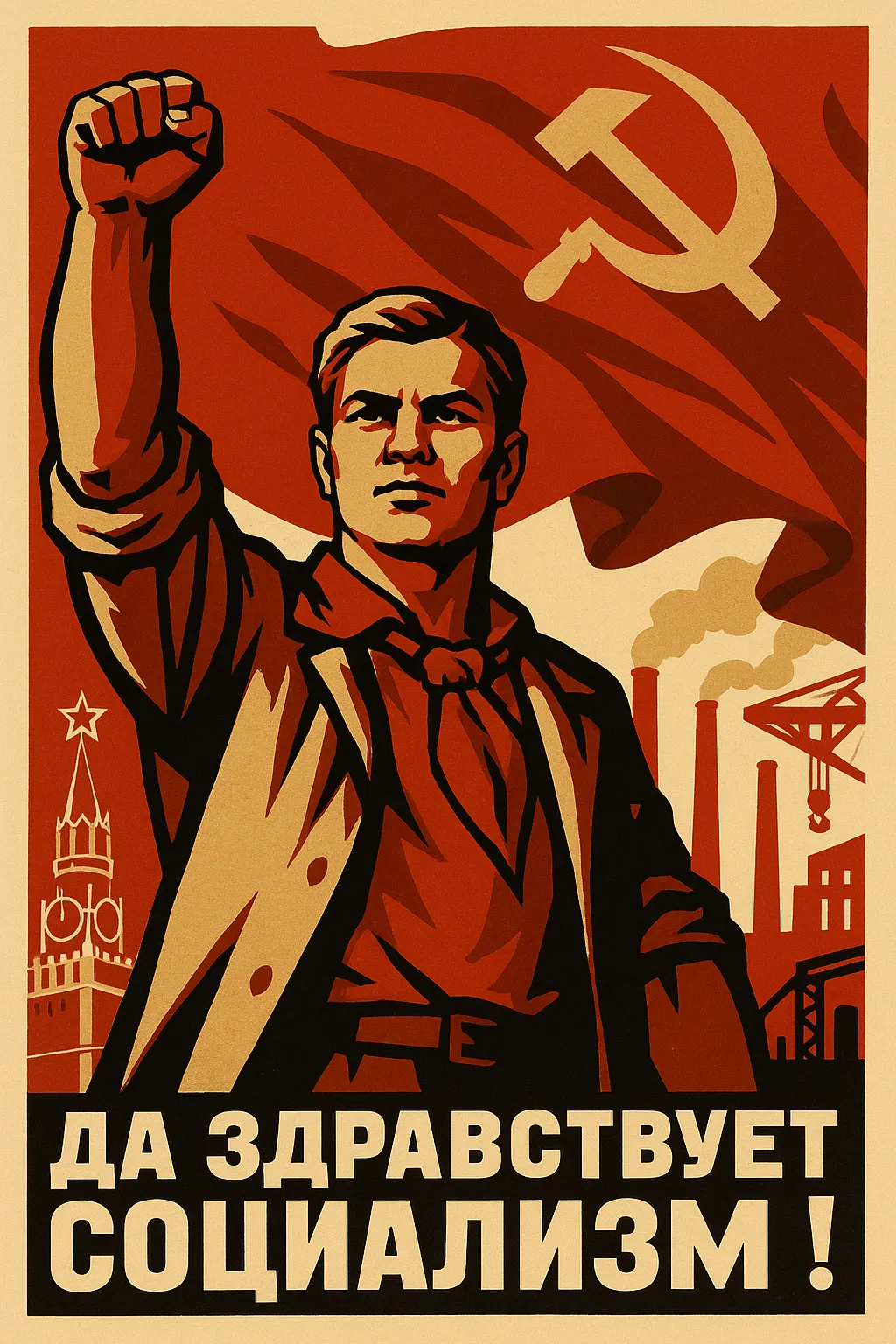
Q: How can a company with 13 billon in revenue make 1.4 trillon in spending commitments?
A: Brad, if you want to sell your shares, I'll find you a buyer.
-- Sam Altman
Industrial collapse rarely begins with failure. It often begins with a triumph. The USSR’s breakneck twentieth-century industrialization offers a dramatic historical example of this arc.
1. Break-Neck Industrialization & Break-Neck Scaling
The USSR’s industrial revolution was a sprint. Factories materialized in remote plains, production quotas soared, and steel output became a proxy for national destiny. Speed outran planning - propaganda outran reality.
Build first. Demand will come.
2. Capacity Expanded for Demand That Never Arrives
The USSR produced far more capacity-in steel, tractors, machine tools-than civilian demand could possibly absorb. Warehouses filled with equipment no one wanted or knew how to maintain. Production targets were met, but utility lagged behind.
3. Data Massaging and Success Narratives Mask the Decline
When Soviet factories missed targets, creative accounting saved the day. Output was measured in tons, not utility. A tractor that broke down after one harvest still counted as an available asset. Officials painted a glowing picture of progress, even as the system frayed.
Soviet newspapers celebrated “record harvests” during famine years.
The system developed a subtle dependency on good news, regardless of accuracy.
4. Subsidies Keep Zombie Capacity Alive
By the 1970s, vast swaths of the Soviet industrial machine were functionally unprofitable. The state kept factories alive through subsidies, preferential loans, and political necessity. They were too big to fail-and too inefficient to succeed.
5. Illusion Ends & Turmoil Begins
In the USSR, the breaking point arrived when the state could no longer subsidize inefficiency. The illusion of everlasting industrial success shattered, exposing decades of concealed decline.
This is not a prediction of collapse, but rather an observation that overheated industries often cool suddenly, and those built on optimism rather than fundamentals cool the fastest.
The Difference That Might Matter
The USSR operated in a closed, centrally planned system. AI operates in a decentralized, competitive, global one with free information flow.
This difference could mean AI avoids the worst consequences-or it might simply mean the cycle will run faster, as global capital accelerates every stage.
Yet history offers a lesson worth heeding - when capacity grows faster than demand, and narrative grows faster than truth, correction is not a possibility-it is an inevitability.
The challenge for the AI era is to avoid the fate of the Soviet era - believing that growth itself is evidence of success. If the industry can admit its limits, discipline its growth, and align capacity with actual value delivered, it may become one of the great technological revolutions.
If not?
Then it may become just another chapter in the long history of civilizations building too much, too fast, for futures that never quite arrived.