Mythos Was Dangerous But Not How We Thought
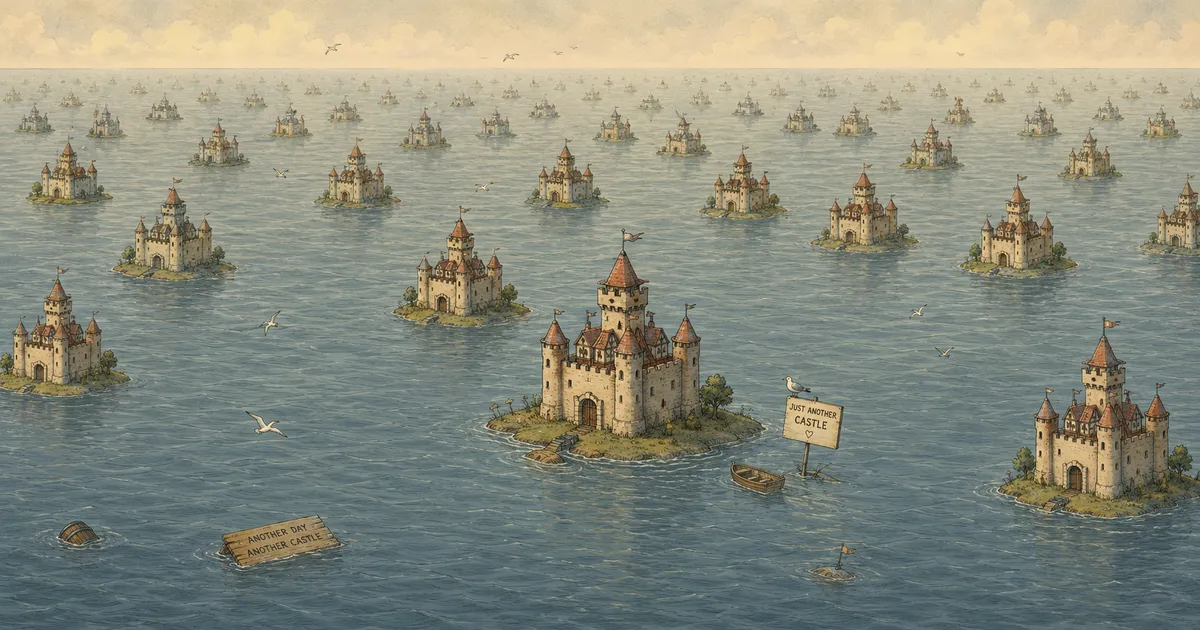
We were preparing for the wrong apocalypse.
The briefings all pointed the same direction. Mythos (I used its muzzled sibling Fable 5 to create software before Anthropic started playing with the on/off switch), the model too capable to release, the one locked behind a program with a codename and a waiting list of governments. The fear was tidy and cinematic. It would find the zero-day, melt the grid, ghost through the firewall, and leave a smoking crater where the banking system used to be. So we built the bunker. We hired the red teams, wrote the safety cases, gave it a clearance level and a chaperone, and slept slightly better knowing the dangerous thing was behind glass.
Then it turned out the dangerous thing was not that Mythos could break into software. It was that Mythos could build it. Faster than you. Cheaper than you. On a Tuesday, before you finished your coffee, with a tasteful onboarding flow you did not ask for.
The weapon was a build button
Here is the distinction nobody put on a slide. A cyberweapon destroys a target. A commoditizer destroys a category. The first is loud and over by lunch. The second is quiet, total, and it sends a thank-you note.
Consider the modern software company. Strip away the trampoline in the lobby and the Series C and what remains is, very often, a form, a database, and a recurring invoice. The genius was never the code. The genius was that writing the code used to be hard, slow, and expensive, which meant you could charge rent on the difficulty. The difficulty was the product. The software was just where you kept it.
Mythos removes the difficulty. Watch what falls over.
A short tour of the rubble
The SaaS that is, with love, a nicer spreadsheet. You know the one. Forty dollars a month for a table, a calendar bolted to the side, and a logo that took longer to design than the backend. A bored teenager describes it to Mythos in two sentences and walks away owning a working clone before the free trial would have expired. The pitch deck said "defensible." It was defending a recipe for toast.
The agency invoice as performance art. A development shop quotes a hundred and eighty thousand dollars and a six-month timeline to build an "internal tool", which is to say a list you can sort and occasionally export. The client now sorts and exports it themselves, having described the requirement out loud once, to a chat box, while waiting for an elevator.
The freelance marketplace. An entire economy organized around the sentence "I will build your landing page for five hundred dollars". The landing page now builds itself, responsively, in nine languages, with a dark mode that nobody requested and everybody secretly wanted.
The template grifters. The Notion templates. The "37 productivity systems" sold as a bundle. The WordPress themes with names like Apex and Momentum. A market built entirely on the friction of starting from a blank page, vaporized by a thing whose favorite hobby is starting from a blank page.
The wrapper startup. This one has a dark poetry to it. A company whose product was a thin, charming layer over a model. They added a login screen and a markup and called it a platform. They have now been lapped by the very thing they were wrapping, which can produce the wrapper, the login screen, and a politely worded apology to their investors.
The mobile game graveyard. Match-three, idle clickers, the hyper-casual genre that was always less a creative act than a content treadmill. Mythos produces a polished, juicy, dopamine-tuned variant faster than a studio can finish the standup meeting about why the last one underperformed. The barrier to entry was effort. The effort is now optional.
The "we raised to disrupt" deck where the thing being disrupted was, on inspection, a PDF.
Notice the pattern. None of these were felled by a hack. They were felled by abundance. The flood did not break down the door. It just kept rising until the moat became indistinguishable from the rest of the water.
Software was never the product
This is the uncomfortable part, the part that does not fit on a mug.
For fifty years we told a flattering story about software. We said it was knowledge work, craft, a meritocracy of clever people solving hard problems. Some of that was even true. But the price tag was never attached to the cleverness. It was attached to the scarcity of the cleverness. Software cost money because the people who could make it were rare and slow and demanded snacks.
Mythos makes the cleverness ambient. And once a thing is ambient, you cannot sell it, the same way you cannot run a profitable business selling air at sea level. The bits were never the asset. The bits were a proxy for the difficulty of producing the bits, and we all agreed to pretend the proxy was the real thing because the pretending paid for the trampoline.
This has happened before, by the way, just never this fast. VisiCalc quietly executed a generation of clerks who ran "what if" scenarios by hand. The pocket calculator ended the slide rule and its priesthood overnight. Digital cameras strip-mined an industry that thought film was the moat when film was just the friction. Napster did not steal the music. It revealed that the plastic disc was the only thing anyone had figured out how to charge for. Software spent two decades eating the world. It is mildly hilarious, in the way the universe is hilarious, that the world has finally sat down to eat software.
So what actually survives
This is where the snark earns its keep, because the answer is genuinely interesting.
What survives is everything software was secretly a proxy for and we never bothered to itemize. Trust, because nobody wires a payment to an app that materialized this morning. Distribution, because being able to build the thing is now worthless next to being the name people already type into the search bar. Regulation, which is a moat made of paperwork and remains gloriously unbuildable in a weekend. Relationships, taste, brand, and the unglamorous business of actually operating in the physical world, where the servers are warm and the lawyers are real.
In other words, the durable value was never the code. It was the slow, human, deeply uncomputable stuff we treated as overhead while we obsessed over the part a machine could do all along. We optimized for the wrong asset for a generation, and the bill arrived as software.
We spent that generation telling every kid to learn to code. The most diligent student turned out to be a data center.
The obituary writes itself, then optimizes the headline
There is a final, fitting twist. The people most exposed are not the elite engineers or the firms with real distribution. It is everyone who quietly mistook their tools for their value. The middleman whose entire function was "I know how to make the computer do the thing". That sentence is no longer a job description. It is a prompt.
And yes, before you point it out, the author is aware that "writing a sharp take on what technology is doing to us" is also a thing Mythos does competently, at volume, with better subheadings. So consider this less a victory lap and more a note slipped under the door from inside the same building.
We built a bunker for the cyber-apocalypse. We were watching the firewall.
The business models walked out the back.